
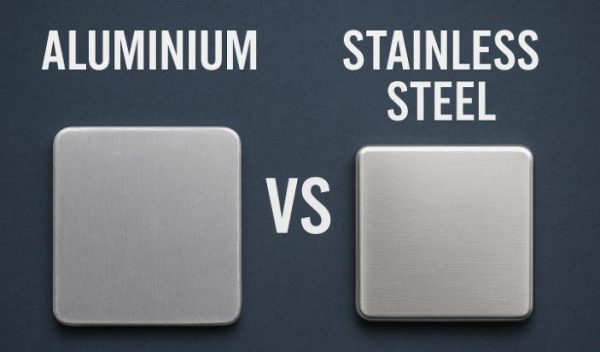
Composition and Fundamental Differences
Understanding the difference between aluminium and stainless steel starts with their composition and how this affects performance.
Table of Contents
ToggleAluminium Alloys and Oxide Layer
- Base metal: Pure aluminium, lightweight and malleable.
- Alloying elements: Commonly includes silicon, copper, magnesium, and zinc to boost strength and durability.
- Oxide layer: Aluminium naturally forms a thin, protective oxide film that guards against corrosion, especially in atmospheric conditions.
- Effect: This oxide layer allows aluminium to resist rust but makes surface treatment and welding unique compared to steel.
Stainless Steel Alloy Types and Elements
- Base metal: Iron, combined with a minimum of 10.5% chromium.
- Key alloying elements: Chromium (corrosion resistance), nickel (strength and formability), molybdenum (enhanced corrosion resistance, especially in marine environments), and carbon (strength).
- Types: Austenitic (most common, high corrosion resistance), ferritic, martensitic, and duplex—all varying by chromium and nickel content.
- Passive layer: Stainless steel’s chromium creates a stable, passive oxide layer, offering superior corrosion and heat resistance.
Impact of Composition on Performance
| Feature | Aluminium | Stainless Steel |
|---|---|---|
| Density | ~2.7 g/cm³ (lightweight) | ~7.8 g/cm³ (heavier) |
| Corrosion resistance | Oxide layer resists rust, but vulnerable in salty or alkaline environments | Passive chromium oxide layer offers strong resistance across many environments |
| Strength | Lower tensile strength; alloys increase strength | Generally higher tensile strength, especially alloyed grades |
| Heat resistance | Lower melting point (~660°C); limited high-heat use | Higher melting point (~1400°C); ideal for heat exposure |
| Malleability & ductility | High malleability, easy to shape | Good ductility in certain grades, varies with alloy type |
Summing Up
The elemental makeup of aluminium and stainless steel dictates their behavior in different settings. Aluminium’s lightness and corrosion resistance suit weight-sensitive and moderate exposure applications. In contrast, stainless steel’s chromium-rich alloys deliver superior strength and corrosion resistance, especially in harsh environments. This fundamental composition difference is crucial when choosing materials based on strength, corrosion resistance, and durability.
Physical and Mechanical Properties Compared
When comparing aluminium and stainless steel properties, one of the most noticeable differences is weight. Aluminium is much lighter, with a density around 2.7 g/cm³, while stainless steel typically weighs about 7.9 g/cm³. This significant difference makes aluminium a top choice for applications where reducing weight is critical, such as aerospace and automotive sectors.
In terms of strength and durability, stainless steel generally outperforms aluminium. Stainless steel has higher tensile strength and hardness, making it tougher and more durable under heavy loads and impact. However, aluminium’s strength-to-weight ratio is impressive—while lighter, some aluminium alloys can match or exceed the strength of certain stainless steel grades, offering an excellent balance where a lightweight but strong metal is needed.
Both metals differ in malleability and ductility: aluminium is more malleable and ductile, making it easier to shape and bend without cracking, whereas stainless steel is more rigid and harder, providing greater resistance to deformation but less flexibility.
When it comes to heat resistance, stainless steel has a much higher melting point (around 1400–1450°C) compared to aluminium (around 660°C). This means stainless steel can withstand higher temperatures without losing strength, which is important for applications involving heat exposure.
Here’s a quick property comparison to :
| Property | Aluminium | Stainless Steel |
|---|---|---|
| Density | ~2.7 g/cm³ | ~7.9 g/cm³ |
| Tensile Strength | Moderate to high (varies by alloy) | High, generally stronger |
| Strength-to-Weight Ratio | High | Moderate |
| Malleability & Ductility | High | Moderate to low |
| Hardness | Lower | Higher |
| Melting Point | ~660°C | ~1400–1450°C |
| Heat Resistance | Moderate | High |
These physical and mechanical differences influence not only the metal’s performance but also which metal fits best depending on your specific project needs—whether it’s for lightweight construction or high-stress environments.
If you’re interested in stainless steel options with tailored strength and finishing, check out specialized products like custom stainless steel decorative ceilings for hotel lobbies that combine durability with aesthetics.
Corrosion and Weather Resistance
When it comes to corrosion and weather resistance, aluminium and stainless steel both rely on protective surface layers, but their mechanisms differ. Aluminium quickly forms a thin oxide layer that shields it from further corrosion, making it naturally resistant to rust. Stainless steel, on the other hand, develops a passive chromium oxide layer that guards against corrosion and pitting, especially in harsh environments.
In marine and coastal areas where saltwater exposure is high, stainless steel generally outperforms aluminium due to its superior corrosion resistance, although certain aluminium alloys with protective coatings can also fare well. Aluminium tends to be more vulnerable to acidic environments but holds up well in alkaline and neutral conditions. Stainless steel performs reliably across acidic, alkaline, and humid environments, making it a go-to for chemical plants and food processing.
Long-term durability favors stainless steel, thanks to its robustness and low maintenance needs. Aluminium, while lightweight and corrosion-resistant, may require regular upkeep or anodizing in aggressive settings.
Ideal environments:
- Aluminium: Best for dry, mild, or
Thermal and Electrical Conductivity
Aluminium stands out for its excellent thermal and electrical conductivity. It conducts heat and electricity efficiently, making it a go-to choice in applications where transferring energy quickly is vital. This is why you’ll often find aluminium used in cookware, HVAC systems, and electrical wiring — its ability to disperse heat evenly and conduct electricity with minimal loss is a big advantage.
On the other hand, stainless steel has much lower thermal and electrical conductivity compared to aluminium. While it’s not the best conductor, stainless steel offers better stability and durability at high temperatures. This makes it ideal in industrial settings where heat resistance and structural integrity are key. For example, stainless steel is a frequent material in heavy-duty cookware and chemical processing equipment, thanks to its ability to withstand heat without warping or degrading.
Here’s a quick comparison:
| Property | Aluminium | Stainless Steel |
|---|---|---|
| Thermal Conductivity | High (~205 W/m·K) | Low (~16 W/m·K) |
| Electrical Conductivity | High (~37.7 x 10^6 S/m) | Low (~1.45 x 10^6 S/m) |
| Heat Resistance | Moderate, melts at 660°C | High, melts around 1400°C |
| Stability Under Heat | Less stable at high temps | Very stable at high temps |
Given these traits, aluminium is preferred for industries and products requiring efficient heat or electrical conduction, such as electronics and HVAC. Stainless steel, meanwhile, shines where durability under heat and corrosion resistance are more critical.
For those working with stainless steel in heat-intensive environments, understanding its role in durable partitions and architectural elements can be useful. Resources like the detailed guide on stainless steel bathroom partitions show this metal’s practical applications where heat resistance and longevity matter.
Workability, Fabrication, and Machinability of Aluminium vs Stainless Steel
When it comes to machining, aluminium is generally easier to work with than stainless steel. Its softer, lighter nature means it machines faster, creating less tool wear and allowing for higher precision with less effort. Stainless steel, on the other hand, is tougher and harder, which can slow down machining processes and require more powerful tools.
Weldability is another important consideration. Aluminium welds well but needs careful handling because of its oxide layer and thermal conductivity, which can cause warping if not managed properly. Stainless steel usually offers better weldability with strong structural integrity and less risk of cracking, making it a top choice for critical load-bearing structures.
In terms of formability, aluminium scores high thanks to its excellent malleability and ductility. This makes it easier to bend, shape, or stamp into complex designs without cracking. Stainless steel is less flexible but can be formed with proper equipment, offering superior hardness and rigidity when finished.
Finishing options vary as well. Aluminium can be anodised for corrosion resistance and aesthetic appeal, while stainless steel often features polished or brushed finishes that also provide high durability against wear. Both metals support various surface treatments depending on project needs.
From a cost and manufacturing time perspective, aluminium typically offers faster production and lower costs thanks to ease of machining and forming. Stainless steel may increase upfront costs due to tooling and welding demands but provides long-term value through durability and strength.
For specialized construction and decorative projects requiring premium metal workability and finishes, consider reviewing expert solutions like the stainless steel decorative trim options available at reliable manufacturers. This helps balance fabrication quality with practical performance in application.
(Explore more about stainless steel fabrication on stainless steel decorative trim.)
Cost Analysis and Economic Considerations
When comparing aluminium vs stainless steel cost, aluminium generally has a lower upfront material price due to its abundance and easier extraction processes. Stainless steel tends to be more expensive initially because of its alloy composition, which includes costly elements like chromium and nickel.
However, lifecycle cost factors change the picture significantly. Stainless steel’s superior durability and corrosion resistance mean less frequent replacements and lower maintenance costs over time, offering better long-term value for projects exposed to harsh environments. Aluminium, while cheaper upfront, can incur higher maintenance if used in corrosive or high-wear settings.
Price influencers such as alloy grade, market demand, and global raw material trends also play a big role. Premium stainless steel grades with enhanced corrosion resistance or strength can command higher prices. Similarly, certain aluminium alloys designed for strength or heat resistance may cost more.
In :
- Aluminium: Lower initial material cost, lighter weight (reduces transportation and handling expenses), but potentially higher maintenance.
- Stainless steel: Higher upfront cost, longer lifespan, less maintenance, better lifecycle value especially in demanding applications.
When budgeting, consider both the purchase price and the expected durability to choose the most cost-effective option. For detailed product options and custom solutions, explore specialized stainless steel products like custom stainless steel folding doors or decorative stainless steel profiles that balance quality with cost.
Applications and Real-World Use Cases of Aluminium and Stainless Steel
Aluminium and stainless steel serve very different roles in industry due to their unique properties.
Aluminium Uses:
- Aerospace and Automotive: Its high strength-to-weight ratio and light density make aluminium ideal for aircraft frames and car parts, reducing fuel consumption.
- Marine: Lightweight and corrosion-resistant in saltwater, aluminium is common in boat hulls and marine fittings.
- Construction: Used in window frames, roofing, and cladding for its durability and ease of fabrication.
- Consumer Goods: Appliances, electronics casings, and packaging often use aluminium for its malleability and aesthetic appeal.
- Electrical: Excellent electrical conductivity makes aluminium a go-to for power lines and wiring systems.
Stainless Steel Uses:
- Food Processing and Medical: Its superior corrosion resistance and hygienic surface make stainless steel perfect for kitchen equipment, surgical tools, and implants.
- Architecture: Stainless steel is popular in building facades and structural components for strength and visual appeal.
- Chemical Plants and Heavy Industry: Its ability to withstand harsh chemicals, heat, and wear suits it to pipelines, tanks, and heavy machinery.
Hybrid and Clad Materials
In some projects, a combination of aluminium and stainless steel is employed to leverage the strengths of both metals—such as aluminium alloy cores with stainless steel exteriors—to meet specific performance and budget needs.
Choosing Based on Project Priorities
When deciding between aluminium and stainless steel, consider:
- Weight requirements
- Strength and durability needs
- Corrosion environment
- Budget constraints
- Fabrication and maintenance demands
For example, the aerospace industry prioritizes lightweight aluminium alloys, while chemical processing plants prefer the corrosion resistance of stainless steel.
For real estate projects seeking durable and reliable metal solutions, exploring practical cases like the Greenland real estate projects can offer insight into material selection based on environmental and structural needs.
By analyzing these applications, you can better match metal choice to your project’s unique requirements.
Pros and Cons Aluminium vs Stainless Steel
Here’s a quick rundown of the pros and cons for both aluminium and stainless steel based on their strength, weight, corrosion resistance, workability, and more.
Aluminium Pros:
- Lightweight with excellent strength-to-weight ratio
- Great thermal and electrical conductivity
- Highly malleable and ductile, easy to shape and form
- Naturally forms a protective oxide layer for corrosion resistance
- Cost-effective and widely used in lightweight applications
Aluminium Cons:
- Generally lower tensile strength compared to stainless steel
- Less resistant to scratches and dents (softer surface)
- Lower melting point and heat resistance
- Can corrode in highly alkaline or acidic environments over time
- Welding can require extra care due to oxidation
Stainless Steel Pros:
- Superior corrosion resistance thanks to chromium-rich passive layer
- High tensile strength and excellent durability
- Better heat and wear resistance
- Highly weldable and maintains structural integrity in tough conditions
- Ideal for heavy-duty, hygienic, and architectural uses, like stainless steel decorative cabinets or durable water features
Stainless Steel Cons:
- Heavier and denser, which can be a drawback for weight-critical projects
- Lower thermal and electrical conductivity
- Generally more expensive upfront and in fabrication costs
- Harder to machine due to toughness
- May require regular maintenance in extreme environments to prevent surface staining
Common Misconceptions Clarified:
- “Stainless steel never corrodes” – While very resistant, stainless steel can still rust or stain in harsh environments without proper grades or maintenance.
- “Aluminium is weak” – Aluminium alloys often have great strength-to-weight ratios making them perfect for aerospace and automotive needs.
- “Aluminium is always cheaper” – Initial cost can be lower, but lifecycle costs including maintenance and durability must be considered.
- “Stainless steel isn’t formable” – Stainless steel is highly workable, but requires more powerful tools compared to aluminium.
Choosing between aluminium and stainless steel comes down to your project’s priorities—lightweight performance and conductivity vs. toughness and long-term durability. For tailored applications like custom stainless steel decorative cabinets or water features, stainless steel is often the preferred option due to its lasting appeal and strength.
For more on durable long-lasting stainless steel products, check out options like these stainless steel decorative cabinets or water fountain sculptures that highlight stainless steel’s versatility and aesthetic strength.