
Understanding the Materials: The Basics
When we design high-end commercial or residential spaces, the ceiling is often the most overlooked surface. Choosing between a mirror finish and a water ripple texture can completely change the room’s energy. Both materials utilize high-quality stainless steel ceiling panels, but they serve very different aesthetic and functional purposes.
What is a Mirror Stainless Steel Ceiling?

Often referred to as 8K mirror finish stainless steel, this material is polished until it achieves a perfect, glass-like reflection. We use high-grade stainless steel sheets that undergo multiple stages of mechanical polishing to remove every imperfection, resulting in a surface that is indistinguishable from a traditional glass mirror.
- High Reflectivity: It mimics the appearance of a real mirror but offers the unbreakable durability of metal.
- Spatial Expansion: It effectively “doubles” the perceived height of a room by reflecting the floor and walls.
- Sleek Aesthetic: This is the go-to choice for minimalist, ultra-modern, and luxury interior finishes.
What is a Water Ripple Stainless Steel Ceiling?
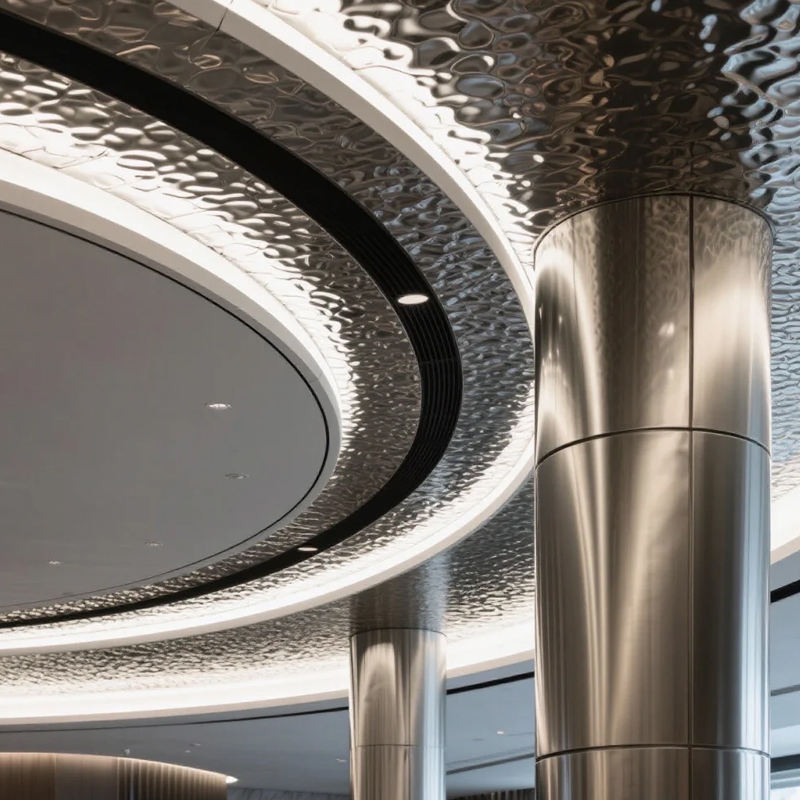
This is a stamped stainless steel sheet that features a 3D undulating texture. We create these patterns—ranging from small ripples to large waves—using precision stamping molds on the metal surface. The result is a water wave stainless steel effect that catches light at different angles, mimicking the natural surface of a moving pond.
- Dynamic Light Play: It diffuses light rather than reflecting it perfectly, creating a soft, shimmering effect across the room.
- Texture and Depth: Adds a tactile, organic feel to architectural metal panels that flat surfaces cannot match.
- Durability and Masking: The stamped pattern is excellent at masking fingerprints, smudges, and minor scratches, making it a practical choice for high-traffic environments.
Rendering Comparison: Visual Effects and Spatial Impact
When we evaluate a mirror ceiling VS water ripple stainless ceiling: comparison of renderings between mirror stainless steel ceiling and water ripple stainless steel ceiling, the spatial transformation is immediate and striking. Both materials serve as premium decorative metal ceilings, but they manipulate light and space in completely different ways.
The Visual Impact of Mirror Ceilings
An 8K mirror finish stainless steel ceiling acts exactly like a traditional glass mirror but with the structural benefits of metal. In architectural renderings, you will notice that mirror ceilings instantly double the perceived height of a room.
- Space Maximization: Creates a sharp illusion of infinite vertical space.
- Light Amplification: Reflects ambient and artificial light directly back into the room, brightening dark areas.
- Sleek Aesthetics: Delivers a crisp, ultra-modern, and high-end commercial look.
The Visual Impact of Water Ripple Ceilings
On the other hand, water wave stainless steel introduces texture and organic movement. Instead of a sharp reflection, these stamped stainless steel sheets diffuse light across their undulating surface.
- Dynamic Lighting: Scatters light to create a soft, glowing, underwater-like atmosphere.
- Visual Depth: The 3D texture adds physical depth and artistic character to the ceiling plane.
- Imperfection Hiding: The rippled surface naturally masks minor dents, dust, and structural inconsistencies.
Side-by-Side Rendering Analysis
A direct ceiling rendering comparison reveals exactly how these materials dictate the mood of an interior design project. Before you finalize your material specs and consult a wholesale guide to budget stainless steel sheets sourced from China to manage your project costs, it is crucial to understand these visual behaviors.
Visual Effect Comparison Table
| Feature | Mirror Stainless Steel Ceiling | Water Ripple Stainless Ceiling |
|---|---|---|
| Reflection Type | Sharp, direct, 1:1 reflection | Diffused, distorted, artistic reflection |
| Spatial Effect | Doubles room height visually | Adds texture and movement |
| Lighting Interaction | Bounces light sharply | Softens and scatters light |
| Vibe/Mood | Ultra-modern, sharp, expansive | Fluid, calming, luxurious |
| Ideal Application | Low ceilings, retail displays | Lobbies, lounges, feature areas |
Choosing between these reflective ceiling panels ultimately comes down to whether your space needs the sharp, expansive illusion of a flat mirror or the soft, textured ambiance of a water ripple finish.
Ideal Applications: Mirror Ceiling VS Water Ripple Stainless Ceiling
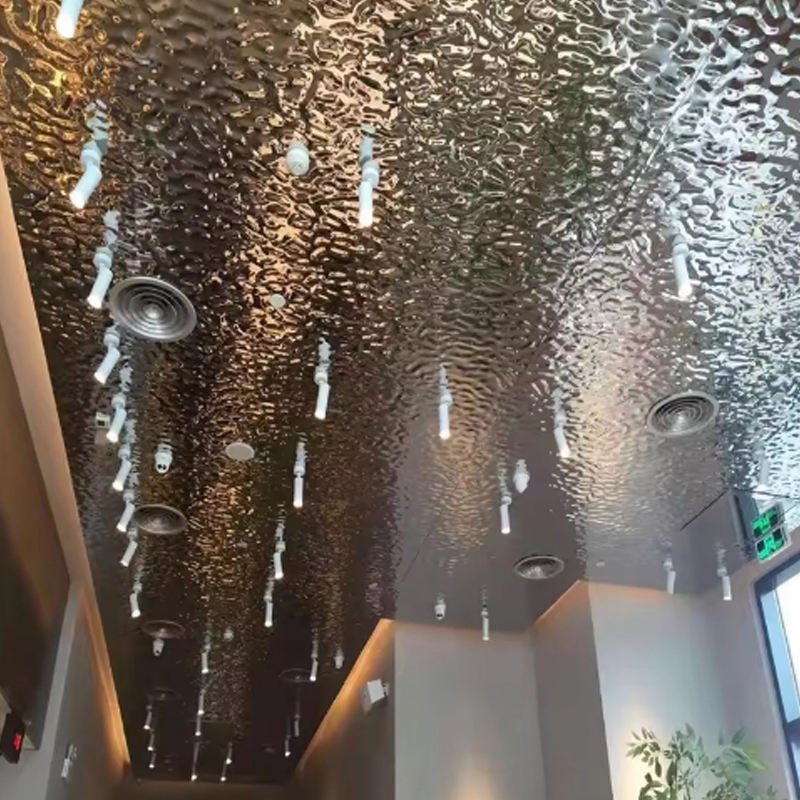
Choosing between a mirror ceiling vs water ripple stainless ceiling comes down to the specific atmosphere you want to create and the functional needs of the room. While both use high-quality decorative metal ceilings, their impact on light and depth is completely different.
Best Spaces for Mirror Stainless Steel
The 8K mirror finish stainless steel is the ultimate tool for spatial manipulation. I recommend this finish when the goal is to make a statement or solve architectural limitations.
- Luxury Hotel Lobbies: It creates a sense of infinite height and grandeur. To complete the look, many designers pair these ceilings with custom stainless steel column covers to maintain a seamless, high-end aesthetic.
- Narrow Hallways and Elevators: Mirror panels effectively double the perceived space, removing the “closed-in” feeling of tight corridors.
- High-End Retail Showrooms: The sharp reflection enhances product lighting and emphasizes a premium brand image.
- Modern Corporate Offices: Used in reception areas to project a clean, professional, and forward-thinking environment.
Best Spaces for Water Ripple Stainless Steel
The water ripple metal sheet is more about texture and mood. It breaks up light reflections into soft, fluid patterns, making it ideal for spaces where a “hard” mirror might feel too cold or clinical.
- Restaurants and Bars: The “water wave” effect interacts beautifully with colored LED lighting, creating a dynamic, immersive atmosphere that shifts as guests move.
- Spas and Indoor Pools: It naturally complements aquatic environments. Unlike flat mirrors, the stamped texture hides condensation spots and mineral streaks much better.
- Creative Studios and Lounges: If you want an artistic edge without the glare of a traditional mirror, these stamped stainless steel sheets provide a sophisticated, tactile look.
- Feature Ceilings in Public Spaces: For large-scale installations, water ripples hide minor structural misalignments that would be obvious on a flat mirror surface. You can see how these textures perform in real-world settings by browsing our project case studies.
Quick Selection Guide
| Feature | Mirror Stainless Steel | Water Ripple Stainless Steel |
|---|---|---|
| Primary Goal | Visual expansion and brightness | Artistic texture and light diffusion |
| Lighting Interaction | Direct, sharp reflections | Soft, distorted “liquid” reflections |
| Maintenance | Requires frequent cleaning (fingerprints show) | Low maintenance (hides smudges and dust) |
| Vibe | Formal, clean, ultra-modern | Relaxed, creative, organic |
Practical Considerations: Installation, Maintenance, and Durability

Choosing between a mirror ceiling VS water ripple stainless ceiling isn’t just about the initial “wow” factor in a rendering. As a supplier, I always tell my clients that the long-term performance and the effort required during the fit-out phase are what determine the true value of the investment. Both materials offer incredible longevity, but they behave very differently on a construction site.
Installation Differences
Installing 8K mirror finish stainless steel requires a high level of precision. Because the surface is perfectly flat and reflective, any slight misalignment or sub-structure unevenness will be magnified. We provide these stainless steel ceiling panels with a high-quality protective film to prevent scratches, which must remain intact until the very last moment of the project.
In contrast, the water ripple metal sheet is much more “forgiving.” The stamped texture naturally hides minor structural imperfections. While it still requires professional handling, the visual distortion of the ripples means you don’t have to worry as much about the “oil canning” effect that sometimes plagues flat mirror panels.
Maintenance & Cleaning
If your project is in a high-traffic commercial area, maintenance is a deal-breaker.
- Mirror Ceilings: These are magnets for fingerprints and dust. They require regular cleaning with specialized microfiber cloths and non-abrasive cleaners to maintain that crisp reflection.
- Water Ripple Ceilings: The uneven surface of water wave stainless steel is excellent at concealing smudges, streaks, and airborne dust. It stays looking “clean” much longer than a flat mirror surface, making it the preferred choice for busy restaurants and hotel lobbies.
Longevity and Durability
Both options are typically manufactured from 304 or 316-grade stainless steel, ensuring they won’t rust or fade over time. However, their physical resilience differs slightly:
| Feature | Mirror Stainless Steel | Water Ripple Stainless Steel |
|---|---|---|
| Scratch Visibility | High (Scratches are very obvious) | Low (Texture masks minor abrasions) |
| Surface Rigidity | Standard | High (Stamping process hardens the sheet) |
| Cleaning Frequency | High | Low to Medium |
| Impact Resistance | Prone to visible denting | Highly resistant to visible deformation |
For high-end residential or boutique retail, the mirror finish is unbeatable for luxury. But for large-scale commercial ceiling design, the durability and low-maintenance profile of water ripple panels usually offer a better return on investment. Both materials are fireproof and moisture-resistant, making them ideal for long-term architectural use.
How to Choose the Right Ceiling for Your Project
Deciding between a mirror ceiling VS water ripple stainless ceiling depends entirely on the architectural goals and the physical constraints of your space. While both utilize high-quality stainless steel custom products to elevate a room, they serve different visual purposes. If your goal is to double the perceived height of a room with crisp, clear reflections, the mirror finish is the standard choice. However, if you want to diffuse light and create a fluid, artistic atmosphere that hides minor imperfections, the water ripple texture is superior.
Checklist for Designers
When specifying architectural metal panels for high-end commercial or residential projects, use this quick reference guide to make the right call:
| Feature | Mirror Stainless Steel Ceiling | Water Ripple Stainless Steel Ceiling |
|---|---|---|
| Primary Goal | Maximum reflection and spatial expansion. | Texture, depth, and light diffusion. |
| Visual Style | Sharp, modern, and minimalist. | Organic, fluid, and avant-garde. |
| Maintenance | High; fingerprints and dust are visible. | Low; texture hides smudges and scratches. |
| Lighting Interaction | Reflects light sources directly. | Breaks up light into “shimmering” patterns. |
| Ceiling Height | Best for low ceilings to add “volume.” | Best for large open areas or feature zones. |
Key Considerations for Your Project:
- Spatial Volume: Use a mirror ceiling in narrow corridors or small lobbies to eliminate the feeling of confinement.
- Lighting Design: If your project features heavy LED strip lighting or spotlights, water ripple panels will soften the glare and create a sophisticated “shimmer” effect.
- Durability Requirements: For high-traffic public areas where maintenance might be infrequent, the stamped nature of water ripple sheets makes them more resilient against visible wear and tear compared to flat mirror surfaces.
- Installation Precision: Mirror finishes require a perfectly level substrate; any deviation in the base frame will cause a “funhouse mirror” distortion. Water ripple is more forgiving of slight sub-frame irregularities due to its inherent texture.