
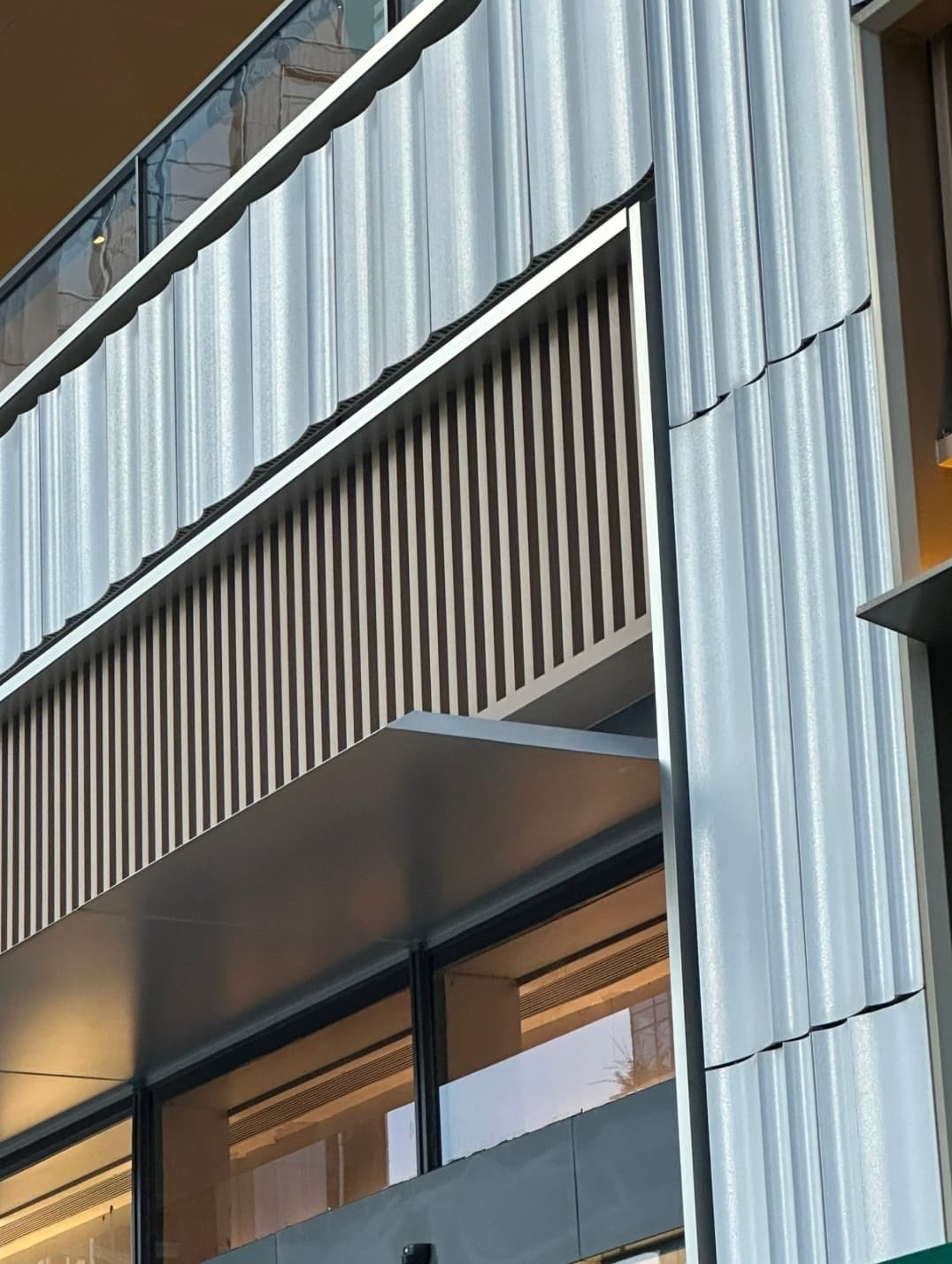
Main Entrances and Canopies
Main entrances take the hardest hit from weather, UV, pollution, rain, and thermal movement.
Table of Contents
Toggle- Common Applications
- Architectural stainless steel cladding
- Canopy soffits
- Stainless steel column covers
- Commercial storefront framing profiles
- Signage backdrops
- Demand Focus
- Supports corrosion-resistant exterior facade cladding
- Handles cleaning and daily wear better than many decorative surfaces
- Keeps entrances looking sharp in a high-traffic retail setting
- Works well with custom metal fabrication and design-deepening for branded projects
- Best Spec Choices
- SS 316 for more exposed exterior edges and moisture-prone areas
- SS 304 for sheltered sections with lighter weather exposure
- Brushed or hairline finishes for a practical, refined look
- Mirror or PVD titanium color coating when the design calls for a stronger visual statement
Decorative Stainless Steel Applications in Central Atriums
Central atriums are where expect the biggest visual payoff. The finish, form, and fixing method all support the same goal: a bold but controlled center point.
- Common Applications
- Feature walls that catch daylight and lift the whole atrium
- Column enclosures that turn structure into a design element
- Suspended art pieces that add movement and depth
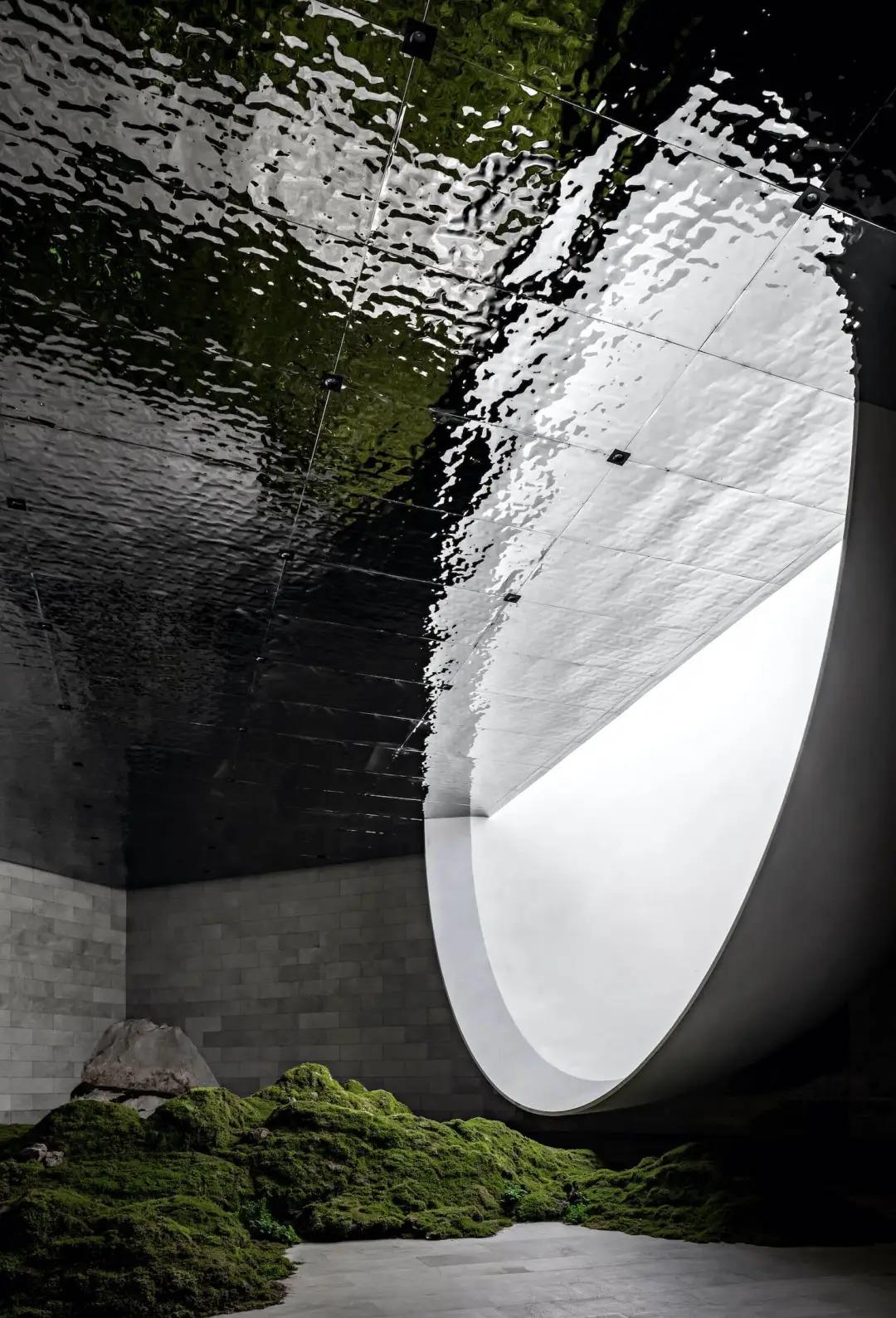
- Water ripple stainless steel ceiling panels for a softer reflective effect
- PVD mirror finish details for a sharper, more premium look
- Demand Focus
- Clean reflections without a busy look
- Strong visual impact from ground level and upper floors
- Reliable overhead installation planning
- A finish choice that supports the overall mall interior metal cladding concept
- Best Spec Choices
For this zone, I usually lean on high-mirror surfaces, mirror water ripple finishes, and PVD colored finishes to shape the space without crowding it. These options work well for a high-traffic atrium feature wall, stainless steel column covers, and suspended statement pieces where the goal is impact from every angle. If large overhead panels are part of the design, stainless steel honeycomb sandwich panels are a practical option for keeping wide surfaces stable and visually clean.
Elevators, Escalators, and Transit Corridors
High-touch zones wear out fast.
- Common Applications
- Elevator cabin wall panels
- Escalator skirt panels and balustrades
- Transit corridor protection
- Demand Focus
- Stands up to trolley impact, scratches, and fingerprints while keeping a clean, finished look.
- For easier cleaning and a calmer visual effect.
- Help reduce the look of scuffs and daily contact marks.
- Keep narrow routes looking sharp under constant traffic.
- Best Spec Choices
- brushed, satin, etched, or anti-fingerprint textured metal finish
- embossed or brushed surfaces
- stainless steel wall protection, corner guards, and corridor cladding
- For a more polished result, I also rely on concealed fixing systems
Decorative Stainless Steel Applications in Storefront Facades
Storefronts need to look sharp, hold clean edges, and work well with glass. It does more than decorate it helps define tenant branding, frame the opening, and keep the facade looking controlled under daily traffic.
- Common Applications
- Tenant branding
- Glass integration
- Clean edge detailing
- Custom metal fabrication that fits the opening
- Demand Focus
| Element | Common options | Best use |
|---|---|---|
| Portal frames | PVD, hairline, vibration | Clean branding and a strong edge detail |
| Trims and surrounds | Hairline, brushed, PVD | Tight visual lines around glass and panels |
| Partitions | Satin, laser-cut metal screens | Separate zones without blocking light |
| Privacy screens | Laser-cut patterns, decorative screens | Light filtering with a custom look |
- Best Spec Choices
- PVD titanium color coating for a more branded, premium look
- Hairline and vibration finishes for a calmer, low-glare surface
- Laser-cut metal screens for privacy, depth, and visual layering
- Concealed fixing systems to keep the facade line clean
- For surface treatment on visible trim and framing, also rely on stainless steel hairline surface treatment
- When privacy screens are part of the design, metal screen partition solutions can also support a more layered facade without making the frontage feel heavy.

Food Courts, Restrooms, and Hygiene Zones
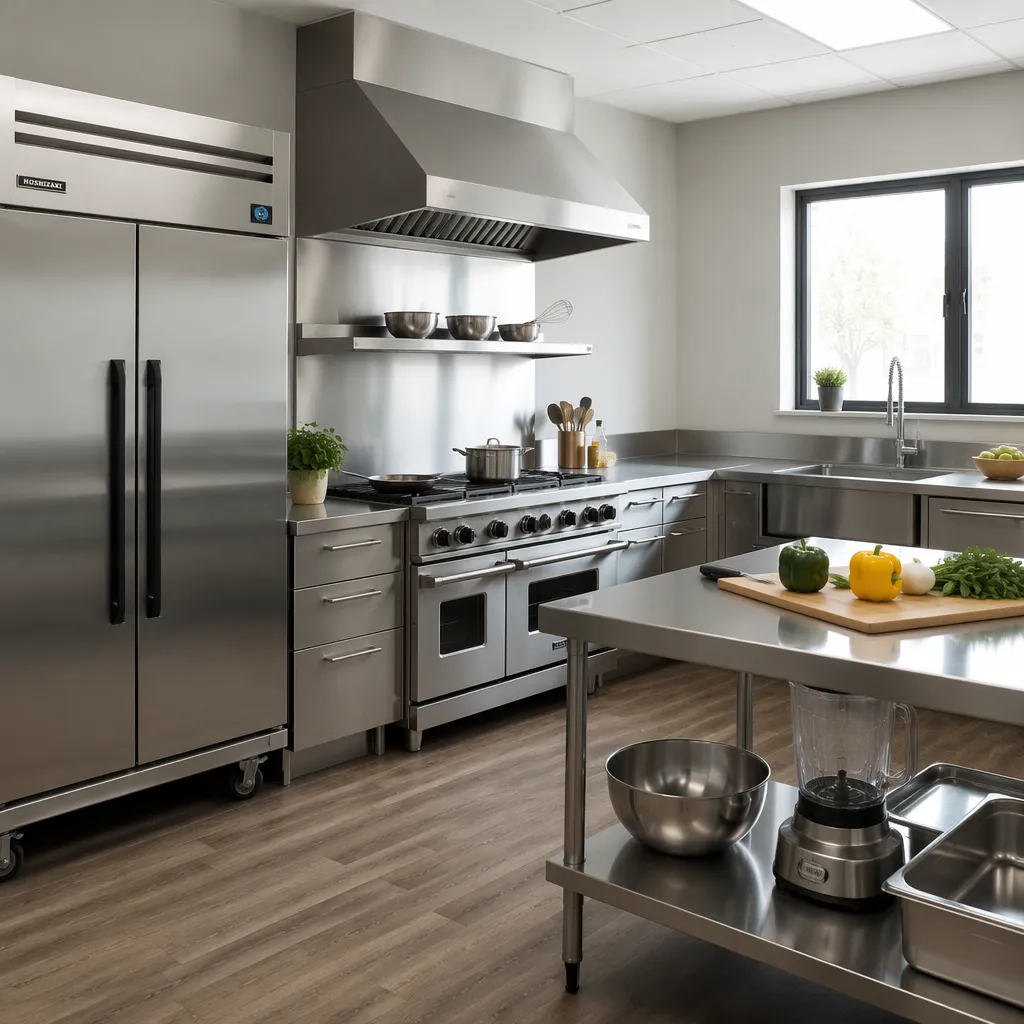
These areas face constant exposure to moisture, grease, chemicals, and sanitation demands. That’s why selecting the right stainless steel application is critical for durability and hygiene.
- Common Applications
- food counters
- vanity surrounds
- wall protection
- acoustic baffles
- Demand Focus
- Can resist fingerprints, are easy to clean, and help prevent corrosion caused by frequent cleaning and chemical exposure.
- Meet hygiene standards but also add a sleek, modern look.
- Ensures long-lasting performance, easy maintenance, and a clean aesthetic.
- Best Spec Choices
- Satin finishes, hairline textures with anti-fingerprint (AFP) coatings, and micro-perforated sheets are ideal choices for these zones.
- SS 316 is recommended for high-moisture and chemical-rich environments, while SS 304 works well in less exposed areas.
Fabrication Challenges in Decorative Stainless Steel Applications
For more on how to handle these challenges, see our guide on how to cut stainless steel.
- oil-canning
One of the main fabrication challenges in decorative stainless steel applications, especially for shopping centre projects, is oil-canning. This phenomenon causes visible waviness or bulging on reflective and PVD surfaces, which can ruin the sleek look. To prevent this, techniques like tension leveling and honeycomb backing are essential. Tension leveling helps achieve flatness and reduce oil-canning, while honeycomb backing provides additional support for wide ceiling panels or large surface areas.
- Concealed fixing systems
Concealed fixing systems are also critical. They hide visible fasteners, ensuring a clean, seamless appearance—vital for high-end mall interiors. Managing thermal expansion is another key concern; stainless steel expands and contracts with temperature changes, so incorporating proper joint design and flexible fixing methods prevents warping or buckling over time.
- PVD coatings
For surfaces with high reflectivity or PVD coatings, controlling tension and ensuring even backing are vital to avoid deformation. Proper fabrication techniques, such as tension leveling and the use of hidden clips, help maintain the integrity and aesthetic quality of the finished installation.

Project Engineering and Custom Fabrication Support
Whether you need custom metal fabrication or complex surface treatments, our support streamlines the process and guarantees high-quality results for your shopping centre stainless steel applications.
- Engineering and expert fabrication
Bringing a retail project from concept to reality requires precise engineering and expert fabrication. We provide comprehensive support, from detailed shop drawings to final installation, ensuring every element aligns with your design intent.
- Advanced techniques
Our team specializes in advanced techniques like PVD coating, water ripple pressing, laser cutting, and AFP treatment, which add durability and unique aesthetic effects to stainless steel applications.
- Consistency
Consistency is key in large-scale projects. We conduct batch color matching and flatness checks to guarantee uniformity across all panels and components.
- Export packaging
Proper export packaging also ensures safe delivery, minimizing damage during transit.
FAQs
1. Which stainless steel grade works best for shopping centre exteriors?
For exterior applications like facade cladding and canopy soffits, SS 316 is the top choice due to its excellent corrosion resistance, especially in harsh weather, pollution, and coastal zones. It handles UV exposure, rain, and thermal movement better than SS 304, making it ideal for long-term durability in outdoor environments. If you’re unsure, consulting with a specialist can help determine the best grade for your specific location and design needs.
2. Where should PVD finishes be used in mall design?
PVD (Physical Vapor Deposition) finishes are perfect for high-visual-impact areas like feature walls, signage backdrops, and decorative metal art. They add vibrant color effects such as gold, bronze, or rose gold, enhancing the mall’s aesthetic appeal. PVD coatings also resist scratches and fingerprints, making them suitable for high-touch zones where durability and visual quality are key. Learn more about PVD titanium color coating to see how these finishes can elevate your project.
3. How do I stop oil-canning on mirror panels?
Oil-canning happens when reflective stainless steel panels warp or flex, causing visible ripples. To prevent this, proper design deepening, tension leveling, and concealed fixing systems are essential. Using honeycomb backing or stiffening ribs can also help maintain flatness, especially on large mirror panels or high-reflective surfaces. Ensuring precise fabrication and installation techniques is crucial for a smooth, ripple-free finish.
4. When should SS 316 replace SS 304?
Switch to SS 316 if your project involves outdoor environments, coastal zones, or areas with high humidity, where corrosion resistance is critical. SS 316 provides superior durability against moisture, chemicals, and pollution, making it suitable for exterior facade cladding, water features, and high-hygiene zones. For interior or low-exposure areas, SS 304 often suffices, but always consider the specific performance targets for impact, hygiene, and visual quality.
5.Can stainless steel support acoustic ceiling applications?
Yes, stainless steel can support acoustic ceiling applications, especially with specially designed metal ceiling baffles or honeycomb-backed panels. These systems help absorb sound while maintaining a sleek, modern look. Proper engineering, including tension control and concealed fixing, ensures stability and performance. If you’re considering stainless steel for acoustic ceilings, working with experienced fabricators will ensure the panels meet both aesthetic and acoustic needs.
6. Quick decision guide for shopping centers zone
| Zone | Recommended Grade | Typical Finish | Thickness | Performance Focus |
|---|---|---|---|---|
| Exterior (entrances, facades) | SS 316 | PVD, textured, mirror | 2-3mm | Corrosion resistance, UV durability, impact resistance |
| High-traffic areas (corridors, elevators) | SS 304 or SS 316 | Brushed, satin, embossed | 1.5-2mm | Wear resistance, hygiene, easy cleaning |
| Interior features (feature walls, ceilings) | SS 304 | Hairline, water ripple, laser-cut | 1-2mm | Visual quality, impact, aesthetic finish |
| Hygienic zones (restrooms, food courts) | SS 316 | Micro-perforated, satin | 1-2mm | Hygiene, chemical resistance, ease of sanitation |