
Why Source Elevator Landing Door Panels from China?
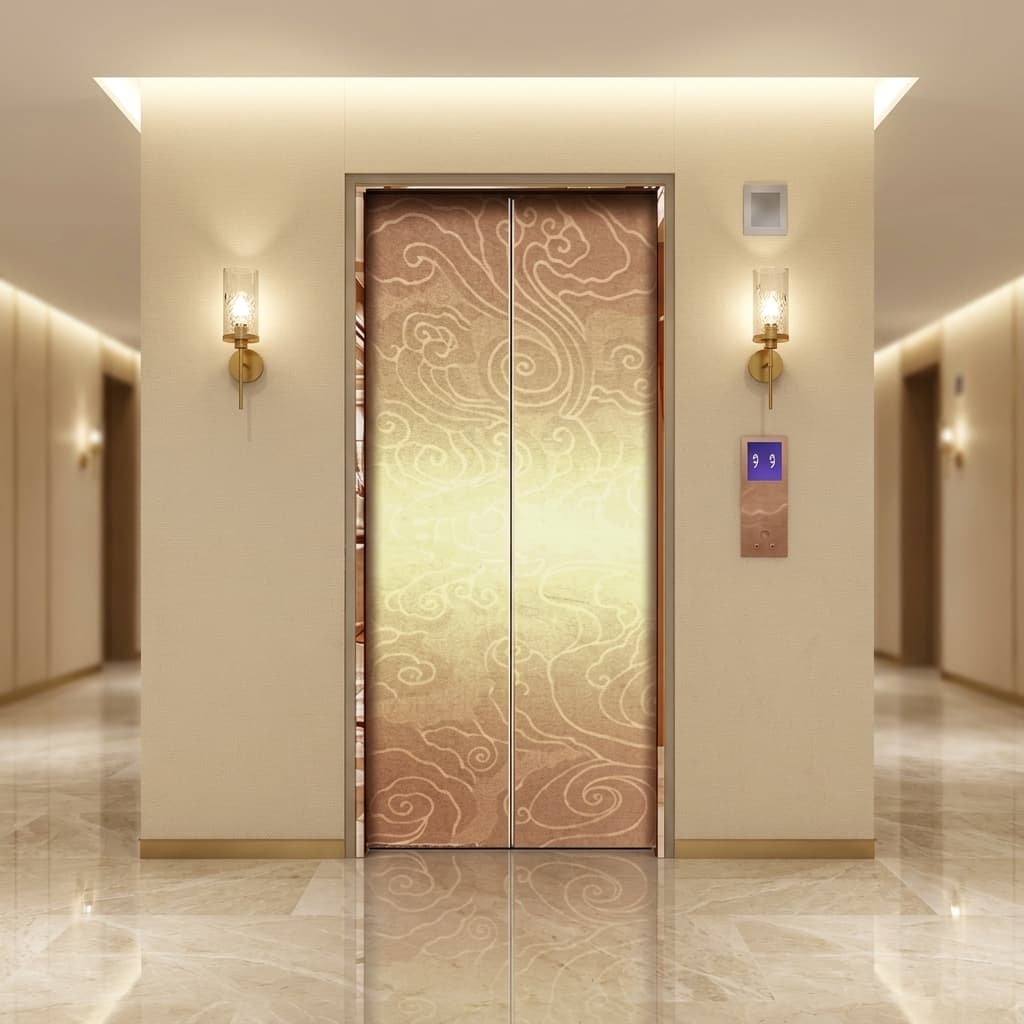
In my years managing supply chains for commercial lifts and modernization projects, China has consistently remained my primary hub for sourcing the elevator landing door panel. The shift in the global supply chain is clear: Chinese manufacturing has evolved from basic mass production into high-precision, safety-critical fabrication.
When you evaluate the top 10 elevator landing door panel manufacturers in China, four distinct advantages stand out immediately:
- Cost-Effective Manufacturing Without Sacrificing Safety: Direct factory partnerships lower your component acquisition costs by 30% to 50% compared to European or North American fabricators. You get heavy-duty structural rigidity and verified safety mechanisms without paying brand markups.
- Advanced CNC Sheet Metal Fabrication: Tier-one Chinese facilities utilize automated fiber laser cutting, multi-axis CNC press brakes, and robotic laser welding. This automation guarantees zero-tolerance consistency across panel folds, door skin alignment, and reinforcement rib placement.
- Massive Variety of Architectural Finishes: Whether your project demands standard hairline stainless steel lift doors, mirror-etched artistic panels, or scratch-resistant PVD titanium elevator doors, Chinese suppliers handle custom architectural finishes in-house with minimal turnaround time.
- Global Code Compliance: Reputable Chinese manufacturers design and test door systems under strict international safety frameworks. You get verified compliance with EN81-20/50, EN81-58 fire resistance certification (EI60 and EI120), and North American ASME A17.1 standards, ensuring smooth site inspections and clear regulatory approval.
Top 10 Elevator Landing Door Panel Manufacturers in China

Over the last decade of sourcing elevator components across Jiangsu, Zhejiang, and Shaanxi, I have evaluated dozens of sheet metal fabrication plants. Finding the right manufacturer for an elevator landing door panel comes down to balancing structural rigidity, precision hanger tolerances, and surface finish quality.
Here is my breakdown of the top 10 elevator landing door panel manufacturers in China, detailing their core strengths, product specialties, and where they fit into your procurement pipeline.
1. Foshan Xinye Stainless Steel Products Co., Ltd. (Best Match)

Xinye Metal is a renowned stainless steel processing plant based in Foshan. As a long-established Chinese manufacturer, the facility is equipped with automated production lines, high-speed bending units, and automated welding lines, specifically designed for the mass production of standard items such as stainless steel elevator landing door panels.
- Core Products: Production and processing of decorative stainless steel panels.
- Key Advantages: Benefits from a comprehensive local stainless steel industrial cluster; this integrated setup allows buyers to achieve significant savings on both procurement labor and material costs.
2. BST Door System / Wittur China (Best for High-End Global Projects)
Wittur’s operational presence in China, integrated alongside BST (Shanghai), bridges European engineering standards with Chinese manufacturing capacity. I consider them the gold standard when a project demands rigorous international compliance without compromise.
- Best For: Grade-A office towers, international transit hubs, and high-speed elevator shafts.
- Core Products: High-performance automatic door operators, fire rated elevator landing doors, and specialized landing headers.
- Key Advantage: Exceptional EN81-58 fire resistance certification and ASME compliance. Their panel stiffness and acoustic damping materials virtually eliminate high-speed aerodynamic draft noise inside the shaft.
3. Suzhou Fermator Elevator Components (Leader in Automatic Door Systems)
Located in the elevator hub of Suzhou, Fermator China specializes in complete entrance dynamics. While they produce complete landing door assemblies, their synchronized door operator and landing lock interfaces set them apart.
- Best For: Projects requiring seamless mechanical synchronization between car doors and landing doors.
- Core Products: Telescopic door systems, two-panel center-opening doors, and complete landing sill assemblies.
- Key Advantage: Trouble-free elevator door operator compatibility. Sourcing panels directly from Fermator eliminates the common site problem of door hanger rollers binding inside the landing door header track.
4. Ningbo Shenling Lift Accessories Co., Ltd. (Best for Cost-Effective OEM Parts)
Ningbo Shenling is an export-focused workhorse. I frequently recommend Shenling to overseas buyers who need reliable, cost-effective replacement panels or standard OEM packages that do not drain project margins.
- Best For: Mid-tier commercial developments, residential towers, and budget-conscious contractors.
- Core Products: Standard hairline stainless steel lift door panels, cold-rolled steel painted panels, and standard sill sets.
- Key Advantage: Unbeatable price-to-performance ratio for standardized sizes (e.g., clear opening widths of 800mm to 1100mm, heights of 2100mm).
5. Suzhou Savera Elevator Components (Top Choice for High-Rise Durability)
Savera built its reputation on precision guide rails, but their sheet metal and landing entrance division is equally formidable. They excel at fabricating doors that withstand extreme mechanical stress and high passenger traffic.
- Best For: High-rise buildings, public hospitals, and heavy-traffic transit corridors.
- Core Products: Structural door panels with integrated vertical stiffeners, heavy-gauge entrance headers, and reinforced landing frames.
- Key Advantage: Exceptional torsional rigidity. When pairing their panels with a structural stainless steel elevator door frame, the entire hall entrance system resists warping and deflection even under heavy dynamic drafts.
6. Ningbo Conai Escalator & Elevator Parts (Specialist in Custom Finishes)
When an architectural brief demands artistic finishes rather than basic brushed metal, Ningbo Conai is a reliable manufacturing partner. They maintain specialized in-house finishing lines for etching, physical vapor deposition (PVD), and embossing.
- Best For: Luxury hotels, high-end residential towers, and bespoke architectural renovations.
- Core Products: Mirror etched elevator panel assemblies, bronze and rose gold PVD titanium elevator doors, and textured relief panels.
- Key Advantage: Flawless aesthetic execution. Their surface passivation treatments prevent discoloration on decorative panels, even in coastal or humid installation environments.
7. Hangzhou Huning Elevator Parts (Trusted by Major Global Brands)
Hangzhou Huning is synonymous with elevator safety components. Their landing door manufacturing processes operate under strict safety and mechanical performance protocols, serving as an authorized component supplier to major multinational brands.
- Best For: Stringent municipal projects and critical infrastructure.
- Core Products: Fire-rated landing door assemblies, heavy-duty mechanical interlocks, and biparting landing panels.
- Key Advantage: Meticulous quality documentation. Every production batch leaves the factory with traceable material test reports and verified fire ratings.
8. Suzhou Dazen Electromechanical Technology (Best for One-Stop Modernization Kits)
Dazen specializes in the retrofit and modernization sector. Modernizing old elevator banks usually means dealing with non-standard shaft dimensions, obsolete sill profiles, and incompatible hangers—scenarios where standard suppliers often refuse to quote.
- Best For: Lift modernization door replacement projects and older commercial retrofits.
- Core Products: Tailored landing door skins, adjustable sill packages, and universal hanger bracket kits.
- Key Advantage: Flexible fabrication tolerances. They review site dimensions and supply custom door panel skins and hanging hardware engineered to fit legacy structural pockets without requiring on-site cutting.
9. Ningbo Ouling Elevator Components (Reliable Mid-Range Door Supplier)
Ningbo Ouling serves the mid-market segment with solid, no-nonsense manufacturing. They produce straightforward landing doors that install quickly and function reliably over millions of cycles.
- Best For: Standard residential elevator modernization and light commercial structures.
- Core Products: Two-panel side opening telescopic door systems, standard central opening panels, and galvanized landing frame assemblies.
- Key Advantage: Short production turnaround times for standard dimensions, backed by lean inventory holding of raw 304 stainless steel coils.
10. Shanxi Nova Elevator Parts (Go-To for Bespoke & Glass Landing Doors)
Located in inland China’s industrial corridor, Shaanxi Nova has carved out a niche in bespoke structural glass designs and scenic elevator components.
- Best For: Panoramic elevators, shopping malls, observation towers, and bespoke glass atriums.
- Core Products: Framed and semi-frameless glass elevator landing doors, laminated safety glass panels, and customized biparting elevator doors.
- Key Advantage: Precision glass-to-metal bonding. Their glass landing doors maintain proper interlock safety tolerances while providing clear sightlines into the atrium.
Manufacturer Comparison Matrix
| Manufacturer | Core Specialty | Best Application | Primary Compliance / Standard |
|---|---|---|---|
| Xinye Metal | High-volume industrial fabrication | Large-scale standard projects | ISO 9001, CE, EN81-20/50 |
| BST / Wittur | High-speed, fire-rated systems | High-rise & global flagship towers | EN81-58 (EI120), ASME A17.1 |
| Suzhou Fermator | Operator-to-landing synchronization | High-cycle commercial entrances | EN81-20/50, CE |
| Ningbo Shenling | Budget-friendly OEM standard doors | Cost-sensitive commercial builds | ISO 9001, GB7588 |
| Suzhou Savera | Heavy-duty structural doors | High-traffic corridors & hospitals | EN81-20/50, ISO 9001 |
| Ningbo Conai | Decorative PVD & etched finishes | Luxury hotels & architectural cabs | CE, Custom ASTM Finishes |
| Hangzhou Huning | Safety-critical entrance systems | Municipal infrastructure | EN81-58, Tier-1 OEM Standards |
| Suzhou Dazen | Custom retrofit & modernization kits | Replacing legacy elevator doors | EN81, Custom Site Specs |
| Ningbo Ouling | Mid-range standard entrance doors | Residential apartments | ISO 9001, CE |
| Shaanxi Nova | Laminated glass & panoramic doors | Atriums & scenic elevator shafts | EN81-20/50, GB/T Safety Glass |
Understanding Elevator Landing Door Panel Materials and Finishes

When evaluating the top 10 elevator landing door panel manufacturers in China, material selection directly determines your project’s service life, fire safety compliance, and aesthetic appeal. In my experience sourcing lift hall door panels, selecting the wrong alloy grade or surface treatment for the environment is the most common cause of premature wear and costly replacements.
| Material / Finish Option | Best Application | Key Advantage | Relative Cost |
|---|---|---|---|
| 304 Hairline Stainless Steel | Standard commercial & residential | Scratch-resistant, low maintenance | Moderate |
| 316 Hairline Stainless Steel | Coastal zones, subways, chemical plants | Superior chloride & rust resistance | High |
| PVD Titanium / Mirror Etched | Luxury hotels, premium corporate offices | Distinctive architectural look | Premium |
| Tempered / Laminated Glass | Panoramic & scenic elevators | Natural light, open visibility | Premium |
| Powder-Coated Steel | Service lifts, back-of-house, residential | Broad RAL color matching | Budget |
Hairline Stainless Steel: 304 vs. 316 Grade
Hairline stainless steel lift door panels are the universal standard for modern passenger elevators. The directional grain effectively conceals fingerprints and minor scuffs from daily foot traffic.
- Grade 304 Stainless Steel: The industry benchmark for roughly 90% of indoor elevator installations. It delivers dependable tensile strength and corrosion resistance against ambient moisture and standard cleaning agents.
- Grade 316 Stainless Steel: Essential for coastal towers, metro transit hubs, and outdoor installations. The added molybdenum prevents pitting caused by salt spray and harsh industrial air.
To maintain structural rigidity across high-traffic floors without adding excessive weight to the door hanger assembly, many leading factories construct their door leaves using stainless steel honeycomb sandwich panels as an integrated backing.
Mirror Etched and Titanium Gold (PVD) Decorative Panels
For upscale hospitality and corporate headquarters, standard brushed steel can feel utilitarian. Chinese manufacturers specialize in bespoke surface treatments applied directly to 304 stainless steel door skins:
- Mirror Etching: Chemical acid etching patterns into high-polish #8 mirror sheets. Unetched mirror surfaces reflect the hall lights, while etched sections provide matte, non-reflective textural contrast.
- PVD Titanium Coating: Physical Vapor Deposition (PVD) bonds a hard ceramic layer to the metal surface at the molecular level. It creates deep metallic tones—such as champagne gold, rose gold, bronze, and black titanium—without peeling, chipping, or fading over time. Specifying the correct methods to color stainless steel helps prevent shade variations across different floor landings.
- Anti-Fingerprint (AFP) Sealing: A clear, baked-on nanocoating applied over the PVD finish that prevents skin oils from oxidizing the surface.
Framed and Frameless Glass Landing Door Panels
Glass landing doors create open sightlines for shopping malls, airports, and atrium observation shafts.
- Framed Glass Panels: Thick laminated safety glass housed inside slim stainless steel outer profiles. This design offers dependable impact absorption and integrates cleanly with standard door interlocks.
- Frameless Glass Panels: Structural glass anchored only at the top hanger and bottom sill shoe. This delivers an ultra-clean appearance, though it requires precision alignment to avoid stress fractures during operation.
Powder-Coated and Painted Steel for Budget Projects
When budgets are tight or projects call for specific interior color matching, cold-rolled steel with electrostatic powder coating provides a practical solution.
- Full RAL Spectrum: Matches entrance surrounds, drywall colors, or corporate branding schemes without metal fabrication markups.
- Impact Limitations: While cost-effective for residential blocks and service entrances, painted surfaces are more susceptible to deep chipping from freight carts and luggage, requiring higher-durability polyester or epoxy powder formulations.
Key Technical Specs to Check for an Elevator Landing Door Panel
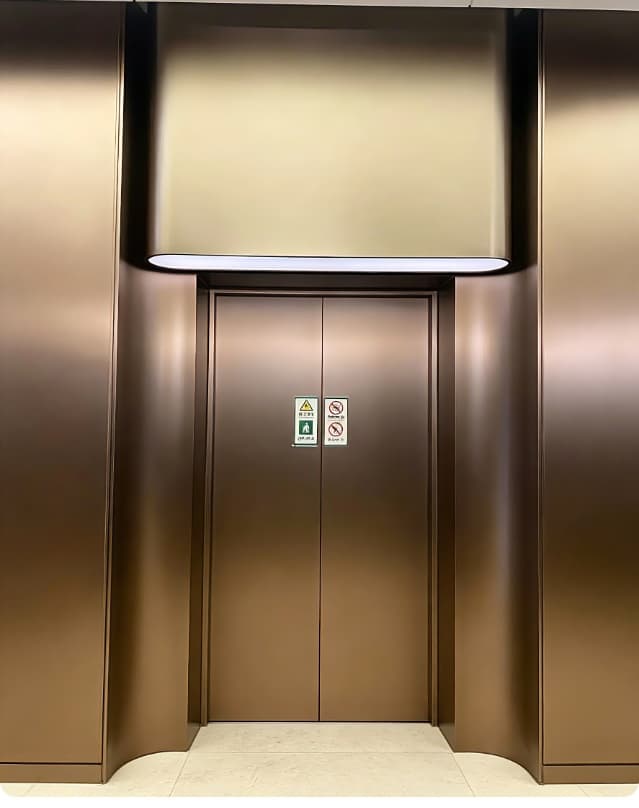
When I evaluate an elevator landing door panel from an overseas supplier, I look straight past the surface finish and inspect the structural engineering first. A panel can look stunning on delivery, but if the fire rating is rejected by local building inspectors or the hanger bracket doesn’t line up with your door operator, you face expensive job-site delays.
Before issuing a purchase order to any Chinese manufacturer, these are the critical technical specifications I always verify:
1. Fire Rating Certifications (EI60, EI120, and UL Standards)
Fire containment is non-negotiable for lift hall door panels. Never settle for a generic “factory test report”—insist on accredited third-party test certifications recognized in your jurisdiction:
EN 81-58 (Europe/Global): Confirms integrity (E), thermal insulation (I), and radiation control (W). Look specifically for EI60 (60 minutes) or EI120 (120 minutes) ratings.
UL 10B / UL 10C (North America): Required for US and Canadian installations, testing fire resistance and hose-stream structural stability.
2. Door Opening Configurations
Landing doors must match the lift shaft layout, pit depth, and traffic profile:
Center-Opening (2-Panel or 4-Panel): The standard choice for commercial hubs and high-rise passenger lifts, providing balanced entry and quick passenger clearance.
Side-Opening Telescopic (2-Panel or 3-Panel): Ideal for tight shaft footprints, residential towers, or freight applications where you need the maximum possible clear opening width.
3. Panel Thickness, Reinforcement Ribs, and Soundproofing
Lightweight, flimsy door skins cause noticeable vibration, hollow clatter, and oil-canning. A heavy-duty elevator entrance panel requires balanced internal construction:
Sheet Metal Thickness: Always specify a minimum of 1.2 mm to 1.5 mm for 304 stainless steel or carbon steel skins.
Internal Reinforcement: Look for vertical omega-shaped (hat-channel) stiffeners welded directly behind the skin to eliminate flex during wind pressure or mechanical impact.
Acoustic and Thermal Infill: High-grade panels use high-density rockwool or fire-resistant honeycomb backing to deaden closing noise and enhance structural rigidity. On complex commercial installations—such as the high-traffic entrance work seen in the Putian Wanda Plaza project—proper acoustic backing keeps large lobby entrances quiet.
4. Compatibility with Door Operators and Sill Systems
An elevator landing door panel does not operate in isolation. It must seamlessly interface with your header track, floor sills, and landing door locks:
Header & Hanger Interface: Ensure the top hanger bolt patterns match your specific door operator mechanism (e.g., Fermator, Wittur, Selcom, or Mitsubishi standard brackets).
Bottom Sill Grooves: Check bottom guide shoe clearance against the landing sill slots (aluminum or extruded bronze) to ensure smooth travel without binding or scraping.
Interlock Box Integration: Verify factory cutouts and mounting studs for your landing door safety contact and emergency unlocking triangle drop-box.
| Technical Parameter | Standard Specification | Heavy-Duty / High-Traffic Spec |
|---|---|---|
| Skin Material Thickness | 1.2 mm cold-rolled or 304 SS | 1.5 mm – 2.0 mm 304/316 SS |
| Fire Resistance Class | E120 / EW60 | EI60 / EI120 (Insulated) |
| Internal Insulation | Flame-retardant paper honeycomb | High-density rockwool (100 kg/m³) |
| Reinforcement Profile | 2 vertical U-ribs | 3–4 hat-channel stiffeners + anti-flex braces |
| Sill Guide System | Nylon bottom guide shoes | Reinforced brass or heavy-duty polymer shoes |
| Etching/Coating Standard | Standard hair-cell brushed | PVD color coating with anti-fingerprint seal |
Scrutinizing these mechanical details upfront ensures your landing panels arrive ready for fast mechanical alignment, pass code inspection on the first visit, and withstand years of continuous tenant traffic.
How I Vet Chinese Elevator Door Suppliers (And How You Should Too)

Sourcing directly from overseas can feel like a gamble if you do not have boots on the ground. Over years of dealing with factory floors across Zhejiang and Jiangsu, I have developed a straightforward vetting checklist to separate top-tier fabricators from fly-by-night trading middlemen.
1. Verify ISO9001 and Lift-Specific Safety Certifications
General manufacturing certificates are not enough. When evaluating an elevator landing door panel manufacturer, I always demand proof of:
ISO 9001 & ISO 14001: For baseline production consistency and waste management.
EN81-58 / UL 10B / UL 10C Fire Test Reports: Fire safety documentation must match the exact panel construction, insulation core, and steel thickness you are purchasing.
CE and Lift Directive Compliance: Essential for European and Middle Eastern installations.
2. Request Physical Material Samples for PVD Coating Tests
Never approve a mass production run based on digital renderings. For decorative finishes, I request a 150×150 mm physical swatch to test:
Color Uniformity: Checking for batch-to-batch consistency in PVD titanium gold, rose gold, or black mirror finishes.
Surface Adhesion: Performing cross-hatch tape tests to verify that the PVD layer bonds cleanly to the sheet metal.
Scratch & Fingerprint Resistance: Verifying anti-fingerprint (AFP) coatings directly. If your project includes matching entrance portals alongside panels, inspecting a sample customized stainless steel door cover ensures the finish on the jambs matches the landing doors seamlessly.
3. Review OEM/ODM Track Records with Global Tier-1 Brands
A reliable manufacturer will have an audited history of supplying parts or complete door systems to established names like Otis, Schindler, KONE, or TK Elevator.
Ask for project references and production photos showing door systems assembled in factory test towers.
Check if they produce door hanger brackets and sill interfaces in-house, which guarantees tighter mechanical tolerances for smooth opening cycles.
4. Audit Packaging Protocols for Long-Haul Ocean Freight
The biggest headache in buying sheet metal products abroad is receiving containers full of dented, scratched panels. Premium manufacturers protect lift hall door panels using a strict, multi-layer packing sequence:
| Protection Layer | Material Used | Purpose |
|---|---|---|
| Direct Surface | 70–100 micron laser-grade PE film | Prevents scratches during handling and install |
| Corner & Edge | High-density foam & plastic edge guards | Stops bending impact at panel seams |
| Interior Cushioning | Bubble wrap + honeycomb cardboard sheets | Absorbs vibration during ocean transit |
| Outer Crate | Fumigated solid plywood cases with steel straps | Prevents forklift punctures and crate collapse |
Common Sourcing Mistakes to Avoid
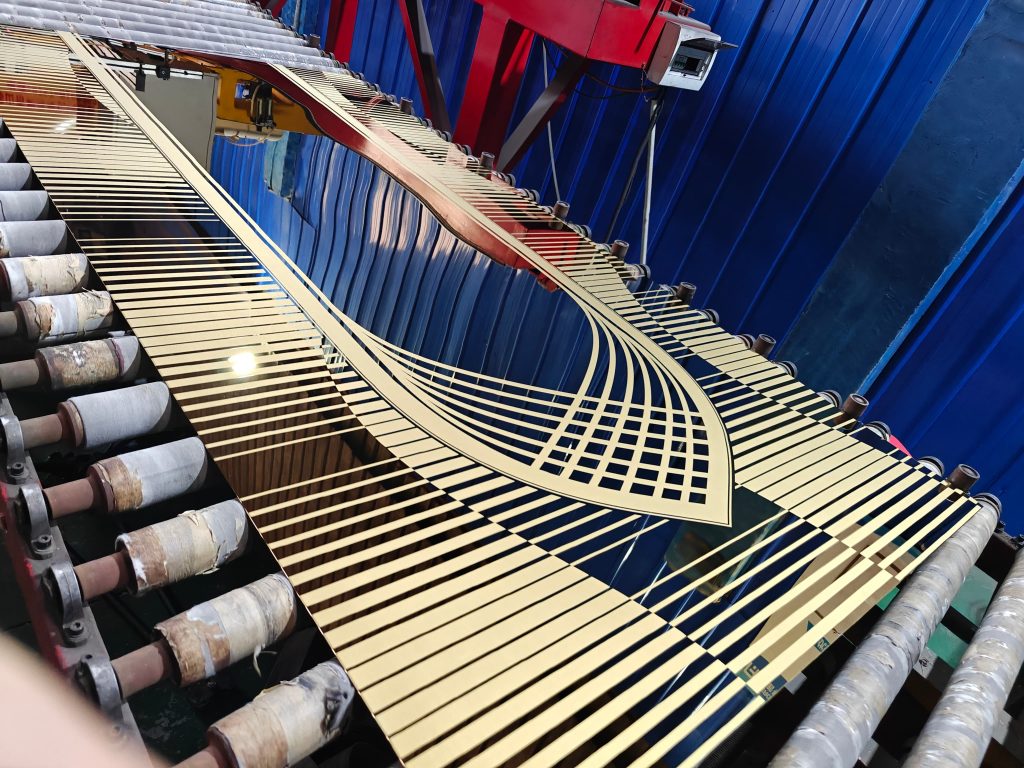
Procuring lift hall door panels from overseas can quickly turn into a logistical headache if technical details are overlooked during the drawing sign-off stage. When dealing with the top 10 elevator landing door panel manufacturers in China, avoiding a few frequent oversights will save you thousands of dollars in site modifications and schedule delays.
Ignoring Sill and Hanger Roller Compatibility
An elevator landing door panel does not operate in isolation. It must seamlessly integrate with your existing landing door header, sill tracks, and hanger assemblies.
- The Problem: Ordering panels based solely on clear opening (CO) width and height without cross-referencing bottom guide shoes, eccentric rollers, and interlock pickup mechanisms.
- The Fix: Always share the exact brand and model of your door operator (e.g., Fermator, Selcom, Wittur, or Mitsubishi style) alongside shop drawings showing the bottom door guide slots and hanger bracket mounting holes.
Choosing 201 Stainless Steel Over 304 in Humid Climates
Trimming budget by substituting 304 stainless steel with grade 201 is a common trap. While 201 looks identical out of the crate, its low nickel content makes it susceptible to rapid surface pitting and tea-staining in humid, coastal, or high-traffic metro environments.
Top sheet metal fabricators in specialized production clusters—detailed in this breakdown of why Foshan is the stainless steel capital of the world—strictly advise using certified SUS304 or marine-grade SUS316 for exterior and coastal elevator entrances to ensure long-term corrosion resistance.
Failing to Confirm Exact Cutout Dimensions for Hall Call Buttons
Misalignments in faceplate preparations are painful to fix once the panels arrive on-site with factory PVD or baked paint coatings.
- Check the Back Box Depth: Verify whether your hall call indicator (LOP) requires a surface-mount prep or a flush cutout with welded studs.
- Key Switch and Fire Service Positions: Ensure fire recall switches, directional lanterns, and keyway holes match local municipal elevator codes before laser cutting begins.
- On-Site Alteration Risks: Cutting or grinding pre-finished stainless steel panels on the job site will burn the protective coating and trigger premature rusting.
Underestimating Lead Times for Custom Etched Designs
Standard hairline stainless steel panels can ship quickly, but bespoke architectural finishes require multi-step processing:
| Finish Type | Standard Production Time | Processing Stages Required |
|---|---|---|
| Standard Hairline / Brushed | 7–10 Days | Laser cutting, punching, CNC bending, rib stiffener bonding |
| Mirror Etched + PVD Titanium | 20–25 Days | Polishing, photo-resist masking, chemical etching, PVD color chamber, forming |
| Custom Embossed / Textured | 15–18 Days | Pattern rolling, precision leveling, shearing, profile bending |
Factoring in factory sample approvals and extended ocean transit avoids project handover penalties. Confirm technical submittals, clear opening tolerances, and finish swatches before releasing the deposit.
FAQs About Buying Elevator Landing Door Panels from China
Navigating the procurement process with the top 10 elevator landing door panel manufacturers in China comes down to clarity on lead times, engineering standards, and logistics. Below are the direct answers to the most common questions I encounter when sourcing landing door systems.
What is the typical MOQ for custom elevator door panels?
Most tier-one Chinese factories accommodate modernization jobs alongside mass production runs:
- Standard Hairline Panels: Minimum order quantities (MOQ) typically start at 1 to 2 complete entrance sets.
- Custom Etched or PVD Titanium Panels: Manufacturers generally ask for 5 to 10 sets to offset setup costs on laser-cutting, bending, and specialized surface treatment lines.
- Custom Sheet Cut-to-Size: When purchasing bare budget stainless steel sheets to form elevator door skins locally, mills usually require minimum batch weights of 1 to 3 metric tons.
How long does production and shipping usually take?
Production schedules depend heavily on surface complexity and mechanical prep:
- Standard production: 10 to 15 working days for standard 304 hairline elevator landing door panels.
- Bespoke architectural finishes: 20 to 25 working days for mirror-etched, embossed, or glass elevator landing doors.
- Sea freight delivery: 15 to 25 days to Western North America, 25 to 35 days to European base ports, and 12 to 18 days to Southeast Asia and the Middle East.
Can Chinese manufacturers match my existing elevator brand’s door locks?
Yes. Established OEM elevator components suppliers in China have pre-engineered CAD profiles compatible with international door interlocks from major brands like Otis, KONE, Schindler, ThyssenKrupp, and Mitsubishi.
When ordering panels for a lift modernization door replacement, I always provide:
The exact interlock model and mechanical brand (e.g., Fermator, Wittur, Selcom).
The centerline coordinates for the door hanger bracket mounting holes.
Cutout specifications for emergency unlocking triangle mechanisms.
How are heavy door panels packaged to prevent damage during sea freight?
Surface defects or twisted panels ruin an installation. Reliable suppliers follow a strict packing protocol:
- Surface Shielding: 70-micron to 100-micron laser-grade PVC protective film covers the face of every stainless steel panel.
- Edge Guarding: Reinforced corner protectors and thick foam strips line all sheet edges and bent return flanges.
- Crating: Panels are packed flat in fumigated plywood cases with internal wooden cleats to stop shifting. When shipping matching stainless steel door trim or header jamb profiles, items are boxed separately with desiccant packs to prevent moisture condensation during long ocean voyages.
Do these suppliers provide fire-test reports for local building inspections?
Top manufacturers supply official third-party fire test certifications that comply with international safety frameworks:
| Standard | Ratings Covered | Typical Testing Body |
|---|---|---|
| EN 81-58 | E120, EW60, EI60, EI120 | TÜV Rheinland, Liftinstituut |
| UL 10B / UL 10C | 1.5-hour, 2-hour fire exposure | Underwriters Laboratories (UL) |
| GB 7588 / GB 21739 | Standard national fire ratings | National Elevator Inspection Center (NETEC) |
Before placing an order, always verify that the supplier’s certificate explicitly lists your required clear opening width, panel thickness, and internal rock-wool insulation density.